
Is POD a Piece of Cake? Part 2: The Real Cost of Running a POD Store
Listen to this Episode:
Here is something that happened while I was writing this very article.
I sat down to document my costs — to give you an honest, real-world breakdown of what running a Print-on-Demand store actually costs. Mid-session, I logged into an old Wix account just to check a number. And there it was: an active subscription I had completely forgotten about. A site charge. A domain renewal. And looming on the calendar — a $348 charge scheduled for June 22nd.
Almighty Allah saved me from that one. I caught it just in time, got on live chat with Wix support, sent them screenshots — and still did not get a refund on what had already been charged. Policy, they said. I told the agent: I am going to write about this in my blog. So here we are.
This is Part 2 of Is POD a Piece of Cake? — and this one is about money. Real money. Lost money. Hidden money. And the kind of costs that nobody puts in their YouTube thumbnail.
Before the Store Even Opened
When I started BinMahmood, I had money and I was willing to invest. That is not a bad thing — every business needs investment. The problem is when you invest without knowing what you actually need.
I started with Shopify. Basic plan, roughly $29–$39/month. I ran it for three months before cancelling. The store looked fine. But I was still finding my footing, and the monthly clock was ticking whether I made a sale or not.
Then came Wix — and this one has a longer story behind it. My SEO team, who I had hired to grow my .co site, told me the website was not up to the mark. Before any SEO work could begin, they said, the site needed to be fixed. What followed was a switch from Elementor to UX Builder — done without my knowledge. I was paying separately for a web designer alongside the six-month SEO contract, and suddenly my own website looked unfamiliar to us. I felt frustrated and out of control of something I had built.
So I went looking for an alternative. That alternative was Wix. The first year was $66 for the store — manageable, or so I thought. What I did not fully register is that platform pricing does not stay at introductory rates. Year two: $132 for the store, plus $36 for the domain. More than double. When I finally tried to exit and requested a refund, I was refused. Policy.
The cruel irony? The very frustration that drove me to Wix was caused by the same SEO team I was already paying. They cost me twice — once in fees, once in the panic decision their actions triggered.
And then there was Carrd — $30 for a year, ten single-page sites with subdomains. I bought it because someone teaching graphic design told me he needed profile pages for his students, and the students would pay. I purchased the plan. He never replied again. That $30 is gone. So is that person, apparently.
Three platforms. Three experiments. Three sets of lessons. All paid for out of pocket before a single product sold.
What the Current Setup Actually Costs
Today, BinMahmood runs on WordPress with WooCommerce and UX Builder, hosted on an outsourced server. The yearly hosting bill is approximately PKR 25,000 — roughly $90 USD at current rates, though every time I check the exchange rate it feels a little worse.
My .co domain is registered through Namecheap. The first year was attractively priced — that is how domain registrars work. They price the entry low and count on renewals costing more. My .co renewal came to $39.98. The .pk domain for the Pakistan storefront renews every two years — and it is coming up in July 2026, so that is already on my radar.
Speaking of domains and Pakistan — here is a real example of how local costs quietly spiral. The PKNIC .pk domain used to be manageable, with prepaid scratch cards available from local vendors. Now PKNIC has shifted base to New York. The domain renewal itself is around PKR 4,000 for two years, or roughly $15.99 USD. But Pakistan applies taxes on foreign currency transactions. Add those in and the real cost climbs to approximately PKR 6,000. That is nearly 50% extra — for the same domain, with the same registrar, doing the same thing it always did. Nobody writes about this in the standard “how to start a POD store” guides, because those guides are written for people in the US or UK where a domain just costs what it costs.
The SEO Team Chapter (A Painful One)
I hired an SEO team for six months. I paid a substantial amount — the exact number stays off the page because it still stings — and what I received in return was an Excel sheet and backlinks from an African job portal.
Let that sink in. An African job portal backlink for a digital calligraphy brand targeting the US and UK market.
I learned more about SEO in three months of doing it myself than in six months of paying someone else to do it wrong. That is not a brag. That is a warning: vet your SEO people carefully, ask for a real strategy upfront, and if they hand you an Excel sheet as a deliverable — run.
Paid Marketing: What I Tried and What Happened
I ran paid Instagram and Facebook ads targeting Pakistan. I spent a substantial amount, running weekly campaigns — typically Friday through Sunday with a WhatsApp chat option attached. I even tried diverting traffic directly to the website once. It failed badly.
The results were essentially zero. Not poor — zero. The Pakistan Facebook market for a product like mine is, to put it plainly, a nightmare. Filled with browsers who have no purchase intent and no shortage of scammers. I quit the paid marketing and have not looked back.
The lesson: paid marketing without the right audience in the right geography is just burning money on a schedule. Targeting Pakistan for an internationally-priced digital art brand was a fundamental mismatch from day one. I knew it somewhere in the back of my mind. I still tried. The market confirmed what I already suspected.
The Printify Reality: Free Plan, Real Costs
I am on the free Printify plan. That sounds great until you look at what it actually means per order.
Printify charges free-plan users higher base prices — premium subscribers pay roughly 25–30% less per product. That difference compounds silently across every order you ever fulfil. Add to that the shipping costs, which are not small, and production and shipping taxes on top of both — and your actual margin per order is considerably thinner than your selling price suggests.
Then there is the delivery promise problem. Printify will show your customer a clean expected ship date and delivery date. What they do not account for is production running late, and when the shipment is finally handed to the courier, the courier also running late. Two delays stacking. Managing those expectations — with a customer I have never met, who is already watching their tracking — is one of the quieter stresses of running a POD store.
Payment Processors, Fees, and Trapped Money
Every payment that comes in gets trimmed before it reaches me. Stripe takes its cut on every transaction — a percentage that feels small until you multiply it across every order, every month.
Then there is Etsy, which works through Payoneer. I have money sitting in my Payoneer account right now that I cannot withdraw until it reaches the $150 minimum threshold. In the meantime, Payoneer charges an annual fee if your account receives less than $2,000 in a 12-month period. Earned money, trapped money, slowly eaten by fees. That is the three-stage lifecycle of a small POD store’s revenue.
The Tools That Keep the Lights On
Running a modern store means running a stack of tools. Here is mine, honestly:
- Printify — Free plan. Higher per-order base costs as the trade-off.
- Gemini — Paid monthly. Research, ideation, and content support.
- ChatGPT — Pay-as-you-go. Used for AI writing and research tasks.
- Kimi — A Chinese LLM that was, for a time, genuinely superior to anything at its price point (free). Before I was using other models, Kimi was my go-to. Unfortunately, Chinese AI infrastructure has been hit hard by DDoS attacks, and Kimi’s free tier now hits usage limits that do not reset for days. A tool I trusted, hobbled by circumstances outside anyone’s control.
- Clipchamp — Free. Video editing for content.
- Google Analytics & Microsoft Clarity — Free. Essential for understanding what is actually happening on the site.
- Florida LLC registration — Approximately $150+ plus consultant fees. Annual state filing obligations continue.
- FBR Pakistan tax filing — Yearly cost. Local obligations do not disappear just because your business is registered abroad.
None of these are optional. Each one serves a real function. And several of them did not exist in my mental model when I first thought — “I will start a POD store.”
The Cost That Has No Invoice
Everything above has a number attached to it. A dollar sign. A line on a spreadsheet.
What does not appear on any spreadsheet is this: every piece of calligraphy on BinMahmood was created by hand — not with a stylus, not with a template, not with AI. With a mouse. In Adobe Illustrator. Pixel by pixel, curve by curve. Hours per piece. For Quranic work, every piece goes through proofreading by an Ustaz before it is ever listed, because accuracy in sacred text is non-negotiable.
The policy pages. The SEO work. The YouTube channel. The blog. The commission communication. The product mockups. The social media content. The tool research. The failed experiments. All of it — done alone, learned from scratch, carried forward without a team.
There is no line item for that. But it is the biggest cost of all.
So What Is the Total?
If you add up just the hard dollar costs — platforms, domains, hosting, LLC, SEO team, paid marketing, tools — you are looking at well over $1,500 to $2,500 USD from day one to today. Conservatively. And that does not include the amounts I am deliberately keeping off the page.
Is that a lot? Compared to opening a physical shop — no. Compared to what the average “start your POD store for free tonight” video implies — absolutely yes.
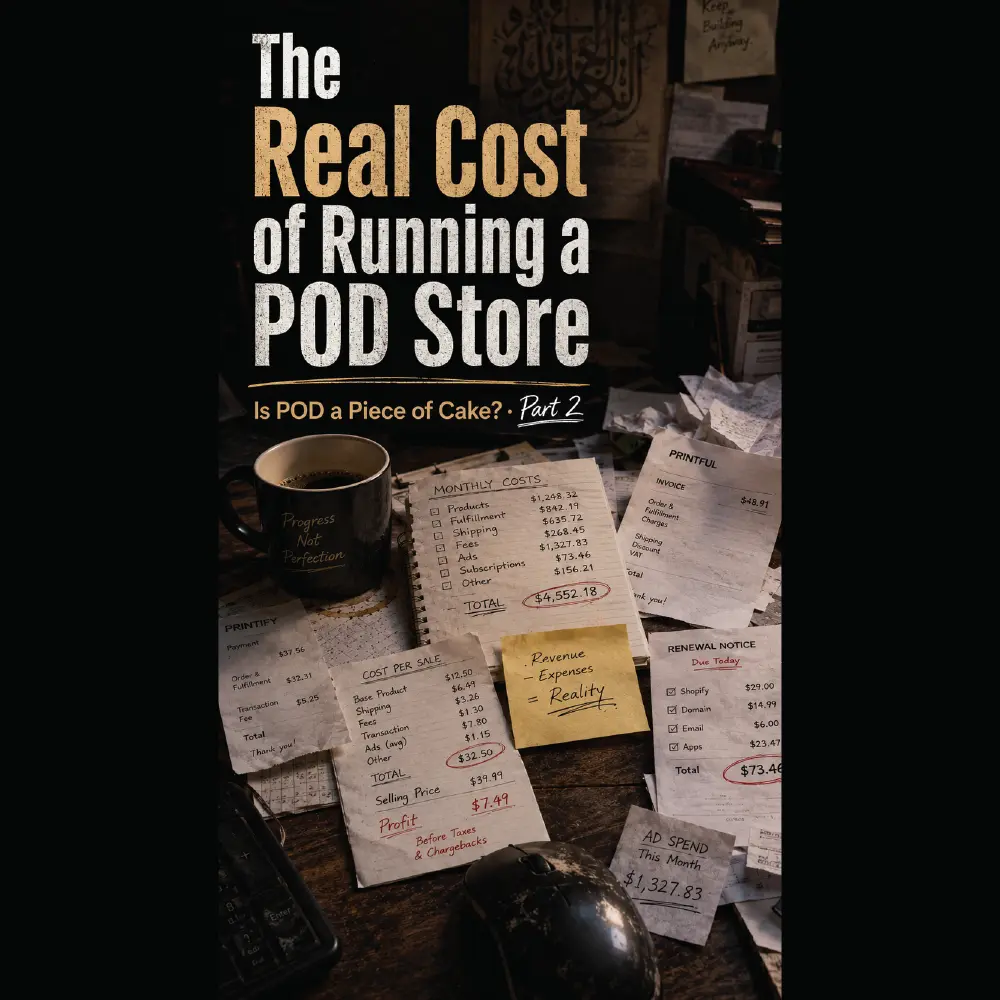
Figure 1.1: Visual breakdown of cumulative architecture overheads vs. marketing leakages.
POD is not free. It is just cheaper than most alternatives. There is a difference, and that difference matters when you are budgeting, planning, and deciding whether this path is right for you.
پیوستہ رہ شجر سے، امیدِ بہار رکھ
“Stay connected to the tree, and keep the hope of spring alive.”
— Allama Iqbal
I keep going. Not because the numbers are comfortable — they are not. Not because every investment paid off — most did not. But because every loss taught something that no YouTube tutorial ever could. And because the work itself — the calligraphy, the craft, the brand — is worth seeing through.
In Part 3, we will talk about what the store actually looks like today — the setup, the workflow, and whether any of this is starting to pay off.
— Ahmed · Founder, BinMahmood · Mouse-Crafted. Not AI-Generated.