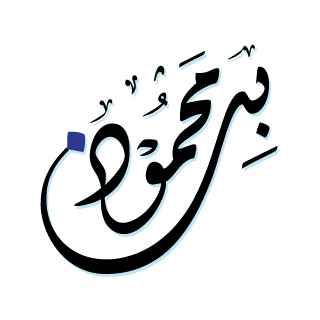
What is Fusion Calligraphy — The BinMahmood Signature Style
There is Traditional Calligraphy. And Then There is Fusion.
Walk into any traditional calligraphy studio and you will find something extraordinary — centuries-old scripts reproduced with discipline, reverence, and skill. It is breathtaking. It is also, in its purest form, an act of faithful reproduction. The goal is to recreate what the masters created, as accurately and as beautifully as possible.
BinMahmood does something different.
We call it Fusion Calligraphy — and it is the only style we practice. Not because traditional calligraphy is anything less than magnificent, but because we believe the art form has a future as extraordinary as its past. A future where the soul of centuries-old Arabic, Urdu, and Persian scripts meets the precision of modern digital design — and the result is something that has never existed before.
This post explains exactly what Fusion Calligraphy is, how it is made, why it is different from anything else available, and why it matters for you.
What is Fusion Calligraphy?
Fusion Calligraphy is the meticulous blending of traditional Arabic, Urdu, and Persian calligraphic scripts — including Al Wissam, Diwani, Nastaliq, Sumbuli, and Thuluth — with the principles of clean, contemporary typography and modern design aesthetics.
The word fusion is deliberate. It does not mean mixing carelessly. It does not mean grabbing a Thuluth letterform and dropping it onto a modern template. It means deeply understanding the rules of each traditional script — its proportions, its history, its cultural weight — and then making precise, considered decisions about how those elements can speak to a contemporary eye without losing their soul.
The result is calligraphy that looks at home on a gallery wall and equally at home on a mug sitting on a kitchen counter in Houston or a canvas hanging in a flat in Birmingham. Art that carries fourteen centuries of heritage and still feels completely of this moment.
The Traditional Foundation — Scripts That Took Centuries to Perfect
Fusion Calligraphy starts with mastery of the traditional. You cannot blend something you do not understand. The scripts that form the foundation of BinMahmood’s work each carry their own deep history:
- Al Wissam — a distinguished traditional Arabic script known for its disciplined elegance and precise, measured letterforms
- Thuluth — the “mother of scripts,” sweeping and dramatic, the script of mosques and monuments across the Islamic world
- Nastaliq — born in 14th-century Persia, the flowing, diagonal script known as the Bride of Calligraphy, the visual language of Urdu and Persian poetry
- Diwani — the ornate, interlacing script of the Ottoman Imperial court, reserved for royal decrees and celebrations
- Sumbuli — a refined Arabic calligraphic style prized for its balance between formality and decorative beauty
Each of these scripts was developed over generations, refined by master calligraphers who spent decades mastering a single letterform. As the Asian Art Museum notes, the great 10th-century calligrapher Ibn Muqla built the entire foundation of Arabic proportional scripts on three elements: the rhomboid dot, the letter alif, and the circle. A system so mathematically rigorous that it is still the basis of calligraphic study over a thousand years later.
That mathematical foundation is something BinMahmood deeply respects — and directly builds upon.
The Modern Layer — Where Precision Becomes Art
Here is where Fusion Calligraphy diverges from tradition — and where BinMahmood’s approach becomes genuinely unique.
Every piece of art created at BinMahmood is mouse-crafted in Adobe Illustrator using Bézier curves. Not drawn by hand with a reed pen. Not generated by an AI. Not assembled from a stock library of pre-made letterforms. Built from anchor point to anchor point, curve to curve, entirely from scratch.
Bézier curves are the mathematical language of modern vector design — named after the French engineer Pierre Bézier, who developed them at Renault in the 1960s. As Wikipedia’s technical reference explains, a Bézier curve is defined by control points that determine the shape and direction of every stroke — giving the designer absolute, mathematical command over every curve in the composition. Every letter produced this way is resolution-independent — it will print at the same razor-sharp quality on a ceramic mug or a two-meter canvas.
This is the connection that makes BinMahmood’s approach both technically modern and philosophically ancient. Ibn Muqla built his system on mathematical proportion. BinMahmood builds each letter on mathematical anchor points. A thousand years apart. The same obsession with precision.
What Makes It Fusion — The Creative Decision Layer
Knowing the traditional scripts and knowing how to use Bézier curves are two separate skills. Fusion Calligraphy is what happens when both are applied simultaneously — guided by a third element: creative judgment.
This is where the fusion actually happens. Decisions like:
- Which script carries the weight of this particular name or word most beautifully?
- Where does a Nastaliq letterform gain from a slightly more upright stance — borrowing from Naskh proportions — without losing its characteristic flow?
- How does a Thuluth composition breathe differently when given negative space informed by modern minimalist design principles?
- What happens when the decorative vocabulary of Diwani is stripped back to its essential curves and placed on a clean, contemporary field?
These are not random experiments. They are informed, considered choices — the kind that only come from genuinely understanding both the traditional and the contemporary, and having the technical precision to execute the vision exactly as intended.
As Gulf Magazine observed in 2025, the most powerful development in Arabic calligraphy today is the emergence of artists who develop distinct signature styles — blending classical forms with modern aesthetics to create work that carries genuine cultural authority while resonating with a global, contemporary audience. Fusion Calligraphy is exactly this. It is BinMahmood’s signature. It is a style that cannot be replicated by a template or generated by an algorithm — because it is built on the artist’s knowledge, decisions, and hand.
What Fusion Calligraphy is Not
In a market flooded with calligraphy-style products, it is worth being precise about what distinguishes genuine Fusion Calligraphy from imitation.
It is not AI-generated. AI tools can approximate the appearance of calligraphic letterforms, but they cannot understand the cultural weight of a script, make considered decisions about proportion and composition, or engineer a letter from scratch. They produce a statistical average of what calligraphy looks like. Fusion Calligraphy produces something singular.
It is not font-based. Many products described as “Arabic calligraphy” are simply standard Arabic fonts applied to a product. A font is a uniform template. Fusion Calligraphy is a custom-engineered composition built specifically for the word, the name, and the product it will live on.
It is not hand-brushed traditional calligraphy. BinMahmood’s work is entirely digital — mouse-crafted in Adobe Illustrator. This is not a limitation. It is a deliberate choice that gives each piece infinite resolution, perfect reproducibility across products, and the ability to serve a global audience with consistent quality.
It is not mass-produced. Every BinMahmood piece is made to order. Nothing is pulled from a shelf. Nothing is produced in advance. Your name, your phrase, your vision — engineered from scratch every time.
Why It Matters — Heritage in Your Hands
The global resurgence of interest in Arabic calligraphy is not accidental. Researchers studying diaspora communities have observed that for millions of people living far from their cultural homelands, Arabic calligraphy serves as one of the most powerful ways to reconnect with heritage — to carry something ancient into the everyday fabric of a modern life.
A mug with your name in Nastaliq is not just a mug. It is a statement that the language of your grandparents, the scripts of poets who lived six hundred years ago, the art that decorated the mosques and palaces of a civilization at its height — all of that belongs in your kitchen, on your desk, in your daily life. Not preserved behind glass. Not locked in a museum. Yours.
That is what Fusion Calligraphy makes possible. The past and the present, the traditional and the modern, the ancient script and the contemporary design — held together in a single piece of art that is yours alone.
Ready to own yours? Start your custom Fusion Calligraphy order here. Tell us your name, your script preference, your product — and we will engineer it from the first anchor point to the last.
Explore our full range of Fusion Calligraphy products: Wall Art, Mugs, Phone Cases, and more.
For a deeper comparison of classical versus Fusion Calligraphy, visit BinMahmood.pk. And read our exploration of mouse-crafted vs AI-generated calligraphy for the full technical story.
Bibliography
- Asian Art Museum Education. “The History of Islamic Calligraphy.” Asian Art Museum, San Francisco. education.asianart.org
- Wikipedia. “Bézier Curve.” Wikimedia Foundation. en.wikipedia.org
- Gulf Magazine. “The Revival of Arabic Calligraphy: 7 Powerful Trends in 2025.” 2025. gulfmagazine.co
- Abramundi. “Arabic Calligraphy: An Ancestral Tradition Inspiring Contemporary Creation.” 2024. abramundi.org
- UNESCO. “Arabic Calligraphy: Knowledge, Skills and Practices.” Intangible Cultural Heritage, 2021. ich.unesco.org
- Linearity. “The Birth of Bézier Curves and How It Shaped Graphic Design.” 2022. linearity.io
- Black Copper. “The Resurgence of Arab Calligraphy in Contemporary Art.” April 2025. blackcopper.org
- BinMahmood. “The Golden Age of Islamic Calligraphy.” BinMahmood.co. binmahmood.co