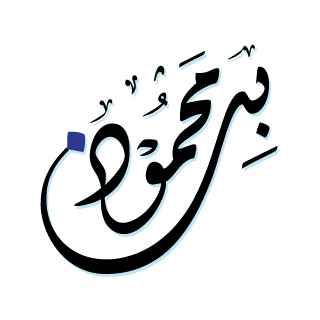
Arabic Calligraphy Wall Art for the Home — A Buyer’s Guide
The Wall Is the Room. Choose What Goes on It Carefully.
Everything else in a room can be rearranged, replaced, or reconsidered. The sofa moves. The rug changes. The lighting gets updated. But the art on the wall sets the register of the entire space — it announces what the room is for, what its inhabitants value, and how seriously they take the idea of living beautifully.
Arabic calligraphy wall art is one of the most powerful choices you can make for a wall. Not because it is fashionable — though it is, with Arabic calligraphy among the fastest-growing categories in home décor globally as of 2025-2026 — but because it carries something that most wall art does not. It carries 1,400 years of a tradition that was specifically designed to transform spaces. The scripts that BinMahmood uses — Thuluth, Nastaliq, Al Wissam, Fusion Calligraphy — were developed by artists who understood that letters on a wall do more than decorate. They speak.
This guide is for anyone who wants to make that choice well. Which script. Which room. Which size. What to commission. How to know the difference between a piece that will define a space and one that will just fill it.
What Makes Arabic Calligraphy Wall Art Work in a Modern Home
Arabic script has visual qualities that make it unusually powerful at wall scale. The right-to-left directionality creates a natural flow that pulls the eye across a composition differently from Latin typography — it reads as movement, not just text. The letterforms range from sweeping horizontal curves to dramatic vertical strokes, giving calligraphy a compositional energy that few other art forms can match in a single piece.
Beyond the visual, Arabic calligraphy carries meaning at a layer that decorative art often cannot reach. A name on a wall is not just aesthetic — it is a statement of identity and belonging. A phrase or word chosen for its resonance is not just visual — it is a daily reminder of something that matters. As design analysis of the calligraphy revival confirms, this is precisely why Arabic calligraphy is gaining international traction beyond its cultural origin: it offers identity and depth at a time when most mass-produced wall art offers neither.
The key is choosing the right piece for the right space. Not every script works in every room. Not every composition works at every scale. Here is how to match them.
Script by Room — The Practical Guide
The Living Room — Thuluth or Fusion Calligraphy
The living room is the most visible space in any home. It is where guests form their first impression, where the family gathers, where the home announces itself. This is Thuluth’s natural habitat.
Thuluth is the monumental script — the one on the Taj Mahal, on the great Ottoman mosques, on the walls of Islamic civilization’s most significant buildings. It was developed specifically for large-scale, high-visibility inscription. A family name or a meaningful word in Thuluth, at canvas scale, commands a living room wall with an authority that nothing else does. Guests will ask about it. Children will grow up with it. It will still be there in twenty years.
For a more contemporary living room aesthetic — cleaner lines, modern furniture, neutral palette — Fusion Calligraphy offers the same cultural weight in a more versatile composition. The blend of Al Wissam, Thuluth, and Nastaliq in BinMahmood’s signature style adapts to modern interiors while carrying the full depth of the tradition.
Placement: Above the sofa on the main focal wall. Large format — the piece should fill the wall comfortably without crowding it. Eye level when seated.
Commission a living room canvas
The Entrance Hall — Al Wissam or Naskh
The entrance is the first thing a guest sees and the last thing a resident passes on the way out. A piece here should be welcoming and clean — it is a transitional space, not a place for the eye to linger. Al Wissam, with its structured balance, or Naskh, with its clear precision, works best here. A name, a simple meaningful word, or a traditional welcoming phrase in either script gives the entrance presence without competing with what comes next.
Placement: On the wall directly facing the front door, or on the side wall visible immediately upon entry. Medium format. High enough to be seen at a glance without being read up close.
Commission an entrance hall piece
The Prayer Room or Quiet Corner — Nastaliq or Naskh
For a dedicated prayer space or a quiet corner meant for reflection, the calligraphy should feel intimate rather than monumental. Nastaliq, with its flowing, diagonal poetry, is the script of devotion and inner life. Naskh, with its clarity, brings a scholarly peace. Either script carrying a meaningful phrase — or simply a single word like Sabr (patience), Shukr (gratitude), or Nur (light) — creates a space that feels genuinely sanctified rather than merely decorated.
Placement: At a slightly lower position than a living room piece — this is art meant to be looked at during quiet moments, not from across the room. Smaller to medium format. The scale of contemplation, not of announcement.
The Bedroom — Fusion Calligraphy or Nastaliq
The bedroom is the most personal room in a home. The calligraphy here should be personal too — a name, a phrase that means something between the people who sleep there, or a word that captures the quality of the space you want this room to have. Fusion Calligraphy’s contemporary warmth or Nastaliq’s lyrical flow both sit well in a bedroom. This is not the space for Thuluth’s authority — it is the space for the script that whispers rather than commands.
Placement: Above the headboard. Medium format. The art that is first seen in the morning and last seen at night.
The Home Office or Study — Naskh or Al Wissam
For a space of work and focus, clarity is the virtue. Naskh — the script of scholarship and the printed word — gives a study or home office a sense of intellectual authority. Al Wissam, precisely balanced, reads as professional and composed. Either carries a name or a meaningful word without competing with the work that happens in the room.
Placement: In the sightline from the desk — directly ahead or to one side. Medium format. Art that supports concentration rather than drawing it away.
The Difference Between a Print and a Custom Canvas
The wall art market offers two fundamentally different products at vastly different value levels. Understanding the distinction matters before you buy.
A print is a design created once and reproduced at scale — the same composition, the same proportions, thousands of times. It is available from dozens of sellers. It looks like what it is: a reproduction. The calligraphy may be beautiful, but it was not made for your wall, your name, or your home.
A custom BinMahmood canvas begins with an empty artboard and is engineered from the first Bézier curve upward — your name or your chosen text, in the script chosen for your heritage and your room, at the dimensions calibrated for your specific wall. No two compositions are identical because no two orders are identical. The piece that arrives has never existed before and will not exist again.
That distinction is visible on the wall. A custom piece has a compositional logic — every element is where it is because the artist decided it should be there. A reproduced print has a compositional logic too, but it was decided for no one and everyone simultaneously. The difference is not always obvious in a photograph. In a room, in person, it is immediately apparent.
What to Commission — The Three Questions
Before placing a custom order, three decisions shape everything:
- What does it say? A family name. A personal name. A meaningful word in Arabic, Urdu, or Persian. A phrase. A word that captures the quality of the room or the life lived in it. If you are unsure, describe the room and its purpose and let the BinMahmood team recommend text that suits it.
- Which script? Use the room guide above. Or describe the room, the aesthetic, the heritage of the household, and defer to the team’s recommendation. The script choice is the most important single decision in the piece.
- What size? The most common mistake in wall art is buying too small. A canvas that looks large in a product photo often looks modest on an actual wall. When in doubt, go larger. The room will expand with it, not shrink.
Browse the wall art range here — or start a fully custom order with your name, your room, and your vision.
Also read: What is Fusion Calligraphy? — the BinMahmood signature style explained, for buyers who want to understand what sets a custom piece apart from a reproduced design.
Bibliography
- Accio. “Trend of Arabic Calligraphy 2025: Art Meets Modern Design.” accio.com
- Gulf Magazine. “The Revival of Arabic Calligraphy: 7 Powerful Trends in 2025.” May 2025. gulfmagazine.co
- Modern Wall Arts. “Choosing Arabic Calligraphy for Your Home Decor.” January 2025. modernwallarts.com
- The Arabic Name Generator. “Arabic Calligraphy Wall Art \u2014 Ideas, Styles and How To Create Your Own.” February 2026. thearabicnamegenerator.com
- Euphoria Interiors. “Top 10 Islamic Wall Decor Ideas for 2025.” November 2025. euphoriainteriors.com
- BinMahmood. “What is Fusion Calligraphy?” BinMahmood.co. binmahmood.co