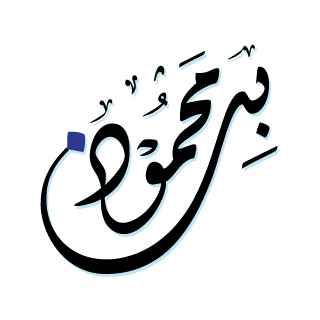
Mouse-Crafted Calligraphy vs AI Art
There is a Question Worth Asking Before You Buy Any Calligraphy Art
The Arabic calligraphy market has never been more crowded. Open any marketplace and you will find hundreds of products claiming to feature “beautiful Arabic calligraphy” — on mugs, phone cases, wall art, tote bags, tees. The designs look polished. The prices are low. And almost none of it is what it claims to be.
Most of it is AI-generated. Some of it is font-based. Much of it is assembled from stock libraries of pre-made letterforms. Very little of it was built by a human being who understands the classical rules of Arabic script, made deliberate decisions about every curve, and engineered each letter from scratch for the specific product it would live on.
The question worth asking before you buy any piece of calligraphy art is simple: who actually made this, and how?
At BinMahmood, the answer is specific, verifiable, and unlike anything else available. Every piece is mouse-crafted — and this post explains exactly what that means, why it matters, and why it is fundamentally different from everything AI generates.
What Does “Mouse-Crafted” Actually Mean?
Mouse-crafted is not a marketing phrase. It is a precise technical description of how BinMahmood calligraphy is made.
Every piece begins with Adobe Illustrator — the industry-standard vector design software used by graphic designers, typographers, and artists worldwide. In Illustrator, artwork is not drawn with pixels. It is built with mathematical paths and Bézier curves — smooth, scalable lines defined by anchor points and control handles that determine the direction and curvature of every stroke.
At BinMahmood, every one of those anchor points is placed manually — using a standard desktop mouse, not a stylus pen, not a graphics tablet, and certainly not an AI prompt. The artist builds each letterform from the first point to the last, calculating every curve against the classical proportional rules of whichever script is being used — whether Nastaliq, Thuluth, Al Wissam, Diwani, or Sumbuli.
The result is art that is:
- Resolution-independent — because it is vector-based, it prints at the same razor-sharp quality at any size, from a ceramic mug to a two-meter canvas
- Mathematically precise — every curve is calculated, not estimated
- Completely unique — built specifically for your name, your product, and your vision — never assembled from a library or generated from a prompt
- Culturally authentic — engineered by someone who understands the historical rules of each script, not an algorithm averaging across millions of images
What AI Art Actually Does — and What It Cannot Do
To understand why mouse-crafted calligraphy is different, it helps to understand what AI image generation actually does. AI image generators — Midjourney, DALL-E, Stable Diffusion, and their competitors — work by training on enormous datasets of existing images. When you give them a prompt like “Arabic calligraphy of the name Fatima,” they do not draw anything. They generate a statistical prediction of what an image matching that prompt should look like, based on patterns in their training data.
This is a fundamentally different process from making art. As a peer-reviewed study published in Nature’s Scientific Reports found, people consistently devalue art labeled as AI-made across multiple dimensions — even when they cannot visually distinguish it from human-made work, and even when they believe it was produced collaboratively with a human artist. The devaluation is not about aesthetics. It is about authorship. About the knowledge that a human being made deliberate decisions, took creative risks, and brought genuine understanding to the work.
What AI calligraphy cannot do:
- Understand script rules. AI does not know the proportional system of Thuluth or the diagonal character of Nastaliq. It approximates what these scripts look like based on patterns. The result may look calligraphic — but it is not calligraphy in any meaningful sense.
- Make considered decisions. Every letterform in a real calligraphic composition involves choices — about weight, spacing, how one letter relates to the next, how the whole composition breathes. AI makes none of these decisions. It generates plausible-looking output.
- Produce genuine uniqueness. AI generates variations of existing patterns. Mouse-crafted calligraphy is built from scratch for a specific name, phrase, and product — it has never existed before and will never exist again in exactly the same form.
- Carry cultural weight. The difference between a name written in genuine Nastaliq by someone who understands its history and a name approximated by an AI model is the difference between something that carries cultural memory and something that merely references it visually.
The Market Has Already Decided — Human Art is Worth More
This is not a philosophical position. It is a market reality that the data confirms.
The Hiscox Art and AI Report — one of the most comprehensive surveys of collector attitudes toward AI art — found that nearly seven in ten established collectors believe AI-generated works do not match the quality of art created by human hands. More tellingly, 82% of art collectors and 76% of art enthusiasts called for clearer distinctions between AI-generated art and human-made content — a remarkable statistic that tells you exactly what the market wants: transparency about what was made by a human, and what was not.
Research from Columbia Business School found that buyers consistently assign higher monetary value to works they perceive as authentically human-made — not because of how the work looks, but because of what they know about how it was made. Collectors invest in the struggle behind a work. In the decisions made. In the presence of a human being who cared enough to get it right.
And a 2025 market analysis found something even more striking: small-scale handmade art purchases rose 66% in 2025 — not despite the rise of AI art, but partly because of it. Digital fatigue is real. When everything looks polished and effortless, something that is genuinely difficult and genuinely human becomes more valuable, not less.
Why Mouse Over Tablet — The Specific Choice BinMahmood Makes
A question worth addressing directly: why a mouse, not a graphics tablet with a stylus?
The typical assumption is that a stylus on a tablet would produce more natural, more fluid calligraphy — closer to the reed pen of the traditional calligrapher. But BinMahmood’s approach is not trying to replicate the reed pen. It is doing something different: engineering calligraphy.
The mouse, used with Bézier curves in Adobe Illustrator, forces absolute precision. Every anchor point is placed deliberately. Every curve handle is adjusted consciously. There is no pressure sensitivity, no accidental wobble, no variation from one stroke to the next unless the artist chooses it. The result is calligraphy that honors the mathematical proportional tradition that goes back to Ibn Muqla in 10th-century Baghdad — where every letterform was derived from a system of precise geometric relationships, not freehand intuition.
This is why BinMahmood calls it engineering calligraphy. It is the meeting point of the most ancient mathematical tradition in Arabic script and the most precise modern vector tools available. The mouse is not a limitation. It is the instrument of that precision.
What This Means for the Art You Buy
When you order a custom piece from BinMahmood, you are not receiving a prompt output. You are not receiving a font applied to a product. You are not receiving something pulled from a stock library.
You are receiving a piece of art that was built — anchor point by anchor point, curve by curve — by a human being who knows the history of the script they are working in, understands the proportional rules that govern it, and made deliberate decisions about how your specific name or phrase should look on your specific product.
That process takes time. It takes knowledge. It takes care. And the result — whether it is your name in Nastaliq on a mug you drink from every morning, or a phrase in Thuluth on a canvas that anchors your living room — carries all of that with it. Not as a claim. As a fact embedded in every curve.
In a world where AI can generate a calligraphy-style image in four seconds, the art that took four hours to engineer is not slower. It is more valuable.
Start your custom mouse-crafted order here — and own something that was genuinely made for you.
Read more: Arabic Calligraphy vs Digital Fonts — two things often confused, entirely different in meaning and value.
For our Urdu-speaking community, explore the full comparison at BinMahmood.pk.
Bibliography
- Moffatt, Lauren et al. “Bias Against AI Art Can Enhance Perceptions of Human Creativity.” Scientific Reports, Nature, November 2023. nature.com
- Horton, C. Blaine Jr. and Iyengar, Sheena S. “Beyond the Machine: Why Human-Made Art Matters More in the Age of AI.” Columbia Business School, July 2025. business.columbia.edu
- Hiscox Group. “Hiscox Art and AI Report.” September 2024. hiscoxgroup.com
- Arts and Collections. “AI-Generated Art: Just Passing Through, or Here to Stay?” 2025. artsandcollections.com
- UC Strategies. “AI Art is Selling for Millions: So Why Are Collectors Buying Handmade Again?” February 2026. ucstrategies.com
- Asian Art Museum Education. “The History of Islamic Calligraphy.” Asian Art Museum, San Francisco. education.asianart.org
- BinMahmood. “Arabic Calligraphy vs Digital Fonts.” BinMahmood.co. binmahmood.co